
Child health
In the remote villages of Papua New Guinea, essential services are being delivered on foot, and at the household. In the rugged valleys of Madang Province, health care often stops where the road does. Beyond that point, it takes determination and sometimes a full day on foot to reach mothers and children in need. That is where people like Hilda Nirap step in.
Hilda is a Village Health Assistant (VHA) in Tangu area of Madang Province. Since 2023, she has been serving 13 surrounding communities. With no vehicle, no clinic, and no steady income to support her role, Hilda presses on – powered by her deep commitment to improving the health and nutrition of women and children.
“Every day I meet with the children in the communities to share nutrition messages, monitor growth, and provide counselling,” she explains. “For pregnant women, I check their progress and offer nutrition advice each month.”
Hilda Nirap
The health issues she confronts are serious: malaria, skin infections, tuberculosis, and child malnutrition. When she is unable to manage a case, she refers patients to the nearest health facility, a three-hour drive away. But that journey is not always feasible. For many pregnant women unable to travel, Hilda is often their only option, providing antenatal care and even assists in childbirth, delivering up to 15 babies each month.
That’s why Hilda’s presence is so critical. She bridges the gap between remote communities and formal health systems, remaining in close contact with Bogia health centre to ensure newborns receive timely immunisation.
“The main driver for me is the need for better health and lack of services in the community,” says Hilda.
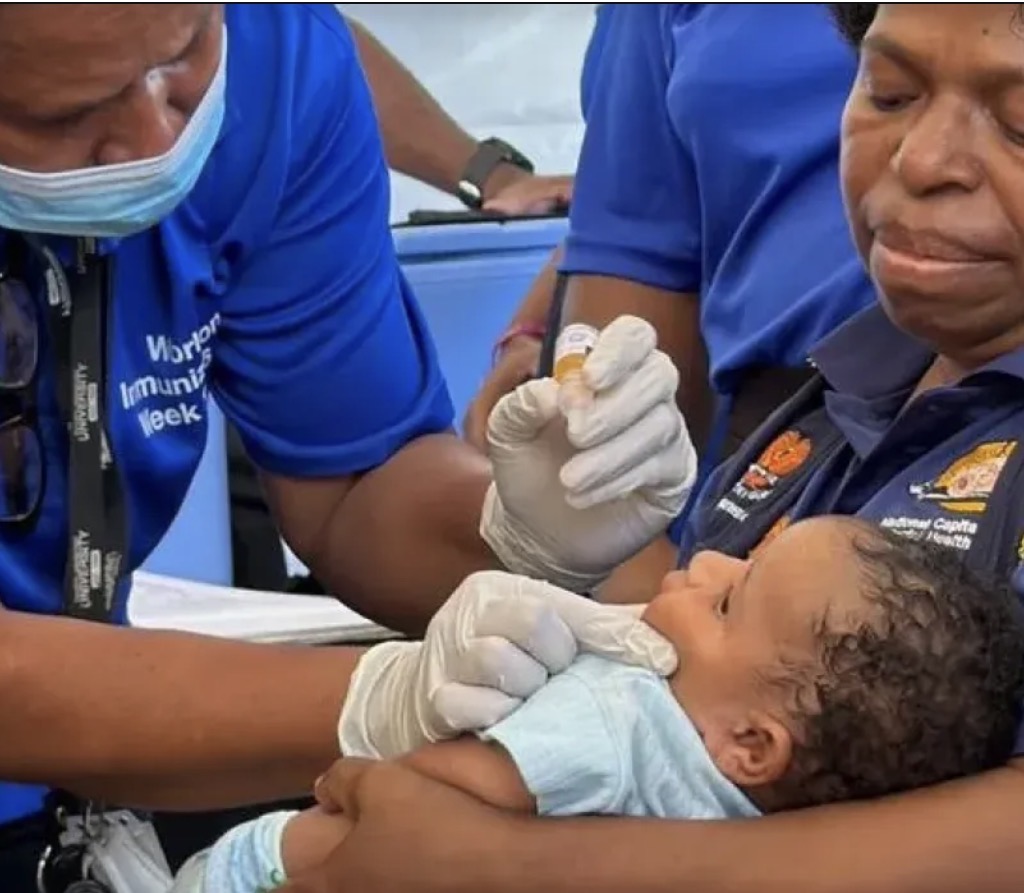
Village Health Assistants like Hilda are at the forefront of tackling some of Papua New Guinea’s most urgent health and nutrition challenges: half of all children suffer from stunting due to chronic malnutrition, and only 47% of children are fully immunised leaving children vulnerable to preventable diseases. Through community-level engagement, VHAs play a critical role in improving nutrition and increasing immunisation coverage in hard-to-reach areas.
Their efforts haven’t gone unnoticed. Community leader Robin Kita praises the work of VHAs. “They are good at what they do,” he says. “Since the mothers began receiving counselling, they’ve changed the way they feed their children – and the children are thriving. Women are giving birth to healthy babies at home now, thanks to Hilda and others like her.”
One story stands out for Hilda – a baby born underweight who, at six months, still weighed only three kilograms. Hilda intervened and introduced micronutrient supplements. “After just one month, the baby started gaining weight,” she recalls with a smile. “It made me proud of what we do.”
Looking ahead, Hilda’s hopes for a better future for the next generation. “I want to see healthier children with improved lives going into the next 50 years,” she says. “That’s what keeps me going.”